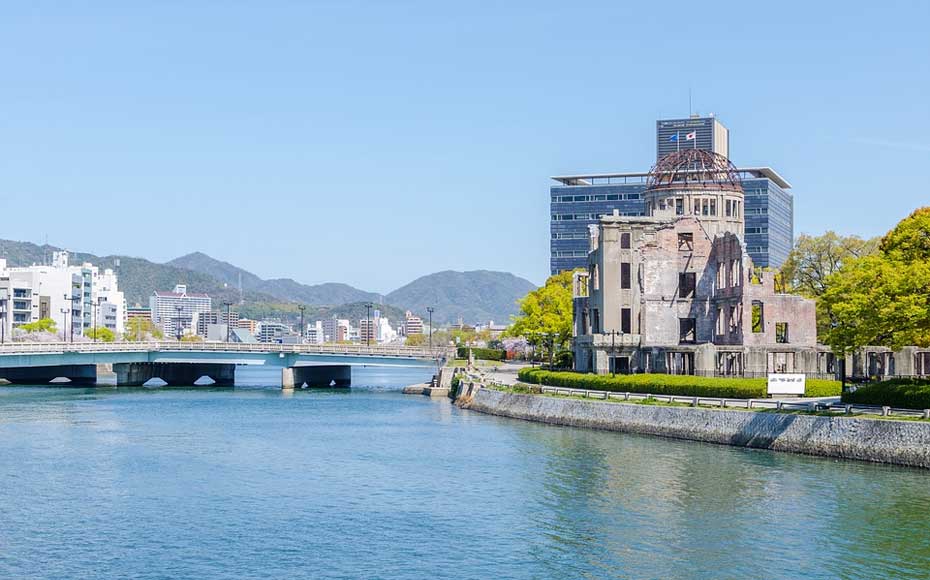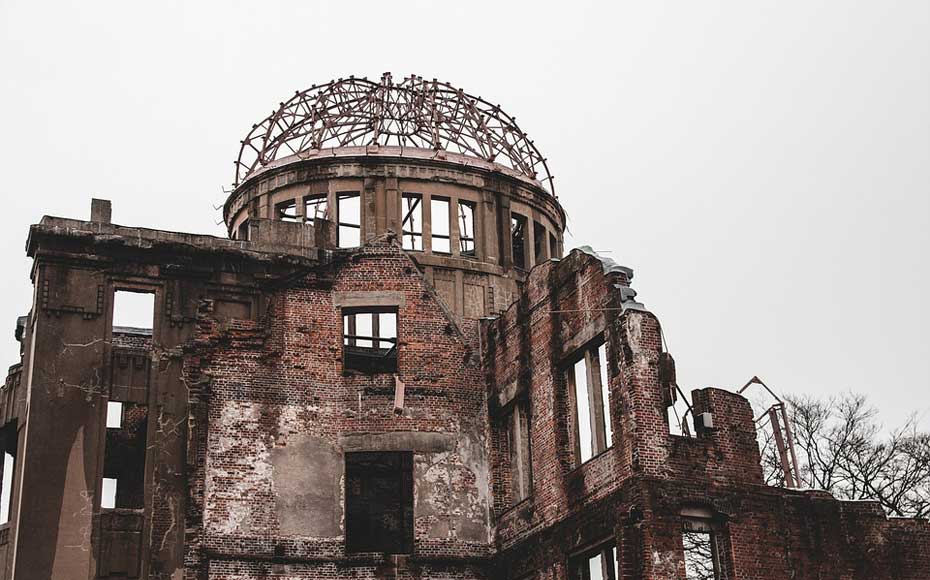
| The Cenotaph for the A-bomb Victims is in the center of Peace Park, on the axis stretching from the Peace Memorial Museum to the A-bomb Dome. The unrealized plan* by Isamu NOGUCHI should not be ignored when you talk about the Cenotaph. TANGE, architect of the whole Peace Park, initially wanted NOGUCHI, who had designed the rails of the two Peace Bridges, to design the Cenotaph as well. |
|
|
DATA |
|
Design: TANGE Kenzo
Location: Nakajima-cho Naka-ku, Hiroshima City
Purpose of Use: Memorial Monument
Completed in: March 1985 (originally in August, 1952)
Structure: Stone (granite)
map (mapion)
map (Google Map) |
|
|
Here's what TANGE had to write:
(snip) He immediately came to our workshop and started struggling with the clay as if he were possessed by something. The portion above the ground was small but the whole object was full of generous energy. An ancient Japanese gem might have been in his mind as prototype.
(From a magazine SHINKENCHIKU Jan. 1954; original text in Japanese) |
NOGUCHI said the form he created was like a clay house dedicated to a burial
mound in ancient Japan. TANGE thought it looked like a gem called magatama
made in ancient Japan. The monument was in inverted U, most of which was
buried under the ground, and there was the space for offering prayer (graphic
#3).
TANGE tried to realize NOGUCHI's plan by getting the mayor's approval, but the Peace Memorial Park Advisory Panel stopped him, insisting that NOGUCHI's American nationality was a problem. KISHIDA Hideto, who was on the panel and one of the major players of architecture in those days, strongly opposed TANGE's attempt. KISIDA, as a mentor of TANGE, charged at TANGE and said, "You have to choose either your friendship with NOGUCHI or our opinion and have to give up the other."
KISHIDA wrote:
(snip) When we discussed NOGUCHI's design, I fervently said:
The Cenotaph is the central monument of this important memorial facility. Japanese has to do it no matter what. Besides, this extraordinarily talented young architect TANGE kenzo was awarded the first place. Isn't he the one who has to utterly dedicate himself to designing the Cenotaph? How can it be legitimate to ask an American sculptor, Isamu NOGUCHI, to do it?
(From En, or Connected, written by KISIDA Hideto; original text in Japanese) |
After all, TANGE adopted NOGUCHI's inverted U idea and made a new design. The Cenotaph was completed in August 1952**. The subterranean space NOGUCHI suggested was not adopted.
This anecdote often makes NOGUCHI a tragic artist who had to be at the mercy of his two home countries. No one evaluates his plan. I personally think it was rather fortunate that his plan was rejected. That's not because he was American but because his plan didn't have advantage. If his plan had been adopted, the vista toward the A-bomb Dome would have been obstructed and the whole concept of the Peace Center would have been ruined. |
|